About KINETIC THEORY MODEL
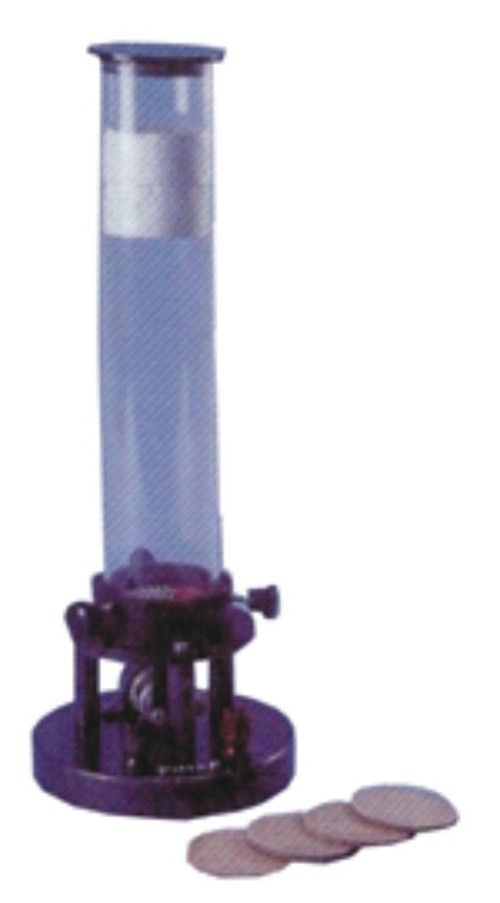
For demonstration of the kinetic theory of gases thinning of air with increasing altitude, etc. Clear, perspex, cylindrical tube with a rubber diaphragm attached to its lower end. Beneath the diaphragm, a piston connected to a 6-V DC motor is fixed for producing agitation. Whole assembly mounted on a circular base with two 4mm-socket terminals for electrical connection to the motor. Metal spheres, ; freely sliding, expanded polystyrene pistons; and 4 card board discs for loading of pistons also included. Clear Particle VisualizationThis demonstration model uses a transparent acrylic tube, allowing students to visually follow the motion of metal balls that simulate gas particles. The analog setup makes kinetic theory concepts tangible and accessible without requiring specialized digital equipment.
Designed for Classroom EngagementPurpose-built for physics education, the model is safe and easy to handle, employing non-toxic materials and rounded edges. It is lightweight and requires no power source, enabling unrestricted operation in any learning environment.
Effortless Operation and MaintenanceAssembling the KINETIC THEORY MODEL is straightforward and requires no tools. Manual agitation represents heating and initiates particle motion, while upkeep involves simple wiping of acrylic and metal surfaces with a soft cloth, keeping the unit ready for repeated demonstration.
FAQs of KINETIC THEORY MODEL:
Q: How does the KINETIC THEORY MODEL demonstrate the motion of gas particles?
A: The model visually represents gas particles using metal balls that move within a transparent acrylic tube. By manually agitating the tube, you simulate the random motion and collisions gas particles undergo when heated, demonstrating the kinetic theory of gases in a tangible manner.
Q: What components are included in the KINETIC THEORY MODEL set?
A: The boxed set contains metal beads (representing atoms), rods, a frame, and a motion mechanism, all assembled within a transparent acrylic tube. These core components work together to effectively visualize the behavior of gaseous particles.
Q: When is this model most effectively used in the educational setting?
A: This demonstration model is most effective during lessons on kinetic theory or gas behavior in physics classes. It helps students better understand particle motion concepts by providing a hands-on, interactive learning experience.
Q: Where should the KINETIC THEORY MODEL be stored when not in use?
A: The model should be stored in its original box or a safe, dry location to protect its acrylic and metal components. Keeping it in a secure place prevents dust accumulation and accidental damage.
Q: What is the process for setting up and operating the model?
A: Assembly is simple and tool-freejust place the components together as guided. To operate, manually shake or gently agitate the tube, causing the metal balls to move and illustrate particle dynamics.
Q: What are the benefits of using a manual model for kinetic theory demonstrations?
A: The manual design allows students to directly interact with the model, promoting experiential learning. It is electricity-free, safe for hands-on use, and provides clear visualization of theoretical concepts without requiring digital displays or measurements.
Q: How should the KINETIC THEORY MODEL be maintained for optimal use?
A: Maintenance involves wiping the acrylic and metal surfaces with a soft cloth to remove fingerprints or dust. This keeps the model clear for visual demonstrations and ensures its longevity in a classroom setting.









 Send Inquiry

 Send Inquiry